
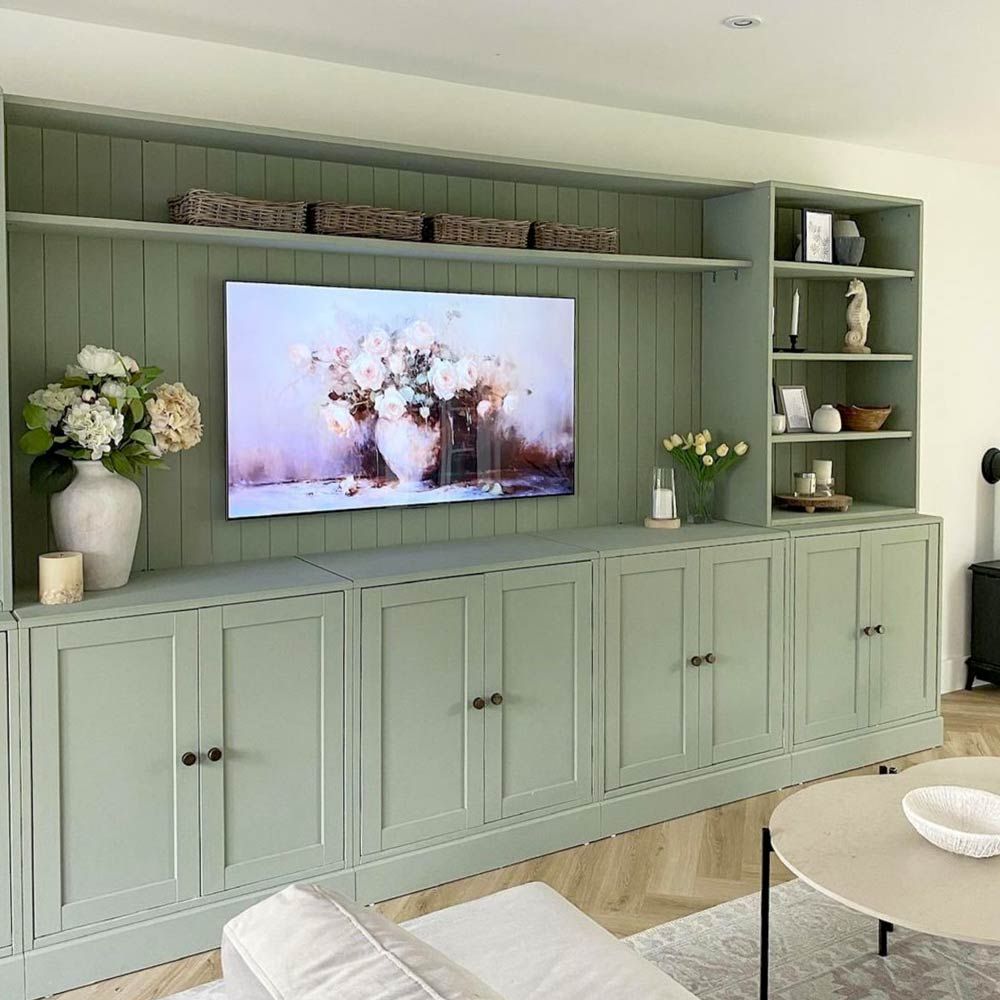
If you’ve not been living under a rock, visible TVs have been the antagonist of a stylish home. Nothing kills the statement of a room like a big black square.
Of course, the market is flooded with hacks to hide it—sliding canvases, the Samsung frame TV, mirrors—there are many ways to stop the black box becoming an attention black hole.
But this particular hack is turning heads for being on a different level at an affordable price point. Here’s everything you need to know (and to buy) for the TV dresser hack.
About The TV Dresser Hack
It all began when @designwithrhonda shared her DIY TV dresser project. Comments ranged from “Genius!” to “Hear me out: this for my office screens”? And they’re right. The hack presents itself as the perfect way to separate rest and play, which is part of the charm for studio apartment dwellers.
It also works to maximise storage. You can have both a dresser, and when you want to watch your favourite shows, a television. Given that dressers sit against walls, it makes sense to make your dresser double as a media unit.
When in storage, it’s harder for dust to collect, which is also what makes exposed TVs in modern design such a turn off. At least for now, this trend is showing no sign of going anywhere.
How To DIY A TV Dresser For Cheap

If you’re keen on upcycling, keep your original dresser but invest in a motorised lift mechanism TV stand. The average one sells for about £200 and ranges in heights, so you can adjust it to fit well. You’ll also need MDF and MDF primer for the tabletop. To finish the table, you can buy some laminate/vinyl wrap, use tiles (zellige is really in right now), or paint it.
The top for the TV stand will need to be fixed with screws that often come with the stand. However, if you’re not savvy with DIY or tools, consider the dresser far easier: an MDF board and some bond adhesive will do the job just fine. The point is that you’re going to use two boards: one for the top of the TV stand and the other for your existing dresser so that they match up.
Cut the MDF to size, prime it and wrap or paint it. If it’s tiling, you can skip this step and focus on scoring the MDF using something sharp before adding tile adhesive and grouting between the tiles (make sure to scrub off excess grout before it dries!)
This hack is yet another example of high-end design becoming that bit more accessible to the everyday person. In the spirit of the above comments, is it too much to hope that we take good design into the office space?



Leave a Reply